A Site Safety Checklist Before Any Heavy Lift
Heavy lifting is one of the few site activities where a single overlooked detail can escalate from a paperwork gap to a serious incident within seconds. Most lift-related problems on UAE sites trace back not to equipment failure but to a step in the pre-lift routine that got rushed or skipped. This checklist walks through the checks a site supervisor or HSE coordinator should work through before any crane, forklift, or elevated work platform goes into operation: ground conditions, exclusion zones, rigging, weather, operator credentials, equipment documentation, and the final briefing that ties it all together.
Ground-Bearing Capacity and Outrigger Pad Checks
A crane is only as stable as the ground beneath it, and this is the check most often assumed rather than verified.
- Confirm the ground-bearing pressure the soil can support at the exact set-up location, not a nearby spot that "looked similar": backfilled trenches, recently compacted areas, and ground near underground utilities or basements often carry far lower capacity than the surrounding surface suggests.
- Check for buried services (drainage, cabling, tanks) beneath the proposed outrigger positions using as-built drawings or a utility survey where available.
- Size outrigger pads (mats or timber cribbing) to spread the load across a wider footprint, and confirm pad dimensions against the crane's outrigger reaction loads for the specific lift radius and load, not just the machine's maximum rated figures.
- Set the crane level using a spirit level or the machine's built-in indicator before outriggers are fully extended, and recheck level after full extension and again once the load is picked, since ground can settle under sustained pressure.
- On sloped or uneven ground, confirm the manufacturer's permitted out-of-level tolerance: most mobile cranes have a very narrow allowance, often under one degree.
Rushing this step to save twenty minutes is consistently one of the most common causes of tip-over incidents, and it costs nothing to slow down and check properly.
Exclusion Zones, Banksman Communication, and Pedestrian Control
Once the crane is positioned, the working area around it needs to be physically and procedurally locked down.
Setting the Exclusion Zone
Mark out the exclusion zone using barriers, cones, or hard barricades sized to the crane's full working radius plus a safety margin, not just the footprint of the immediate lift. Account for the load's swing radius if the boom slews during the operation, and extend the zone to cover any area beneath a suspended load path, even briefly.
Banksman and Signal Communication
- Assign a single, clearly identified banksman or signaller per lift, and confirm every crew member on site recognises who holds that role before work starts.
- Agree hand signals or radio protocol in advance, and test radios for a clear channel before the load is picked, not after.
- If the operator's line of sight to the load or landing point is obstructed at any stage, a banksman or dedicated signaller is mandatory, not optional.
- Brief nearby trades and pedestrian traffic on the exclusion zone boundaries; a lift that is safe in isolation can still be compromised by someone wandering into the swing radius unaware.
Load Chart and Rigging Verification
Every lift should be checked against the crane's load chart for the actual radius, boom length, and configuration in use on the day, not a chart figure remembered from a similar job.
- Calculate the load weight accurately, including rigging gear, spreader beams, and any attachments, and add a margin for uncertainty on loads without a confirmed weight ticket.
- Cross-check the calculated load against the load chart at the specific working radius, factoring in boom angle and configuration, and never assume the maximum capacity figure applies at every radius.
- Inspect slings, shackles, spreader bars, and lifting eyes for wear, deformation, or missing identification tags before each use, and confirm each item's Working Load Limit is rated for the task.
- Check rigging geometry: sling angles below 45 degrees dramatically increase the load on each leg, and this is a common source of miscalculated rigging capacity.
- For non-standard lifts (tandem lifting, unusual centre of gravity, or fragile loads), confirm a written lift plan has been reviewed and signed off before proceeding.
For lifts that fall outside routine capacity or require specialised rigging, our mobile crane rental team can advise on the right crane class and rigging configuration for the job before it's mobilised to site.
Weather and Wind Limits
Weather conditions can change a safe lift into an unsafe one within the same shift, so this check needs to be repeated, not done once in the morning.
- Confirm the manufacturer's maximum permissible wind speed for the specific crane, boom length, and load surface area: high-surface-area loads such as cladding panels or ductwork are affected at much lower wind speeds than compact loads.
- Monitor wind speed continuously during the lift using a handheld anemometer or the crane's own sensor, particularly during Abu Dhabi's shamal wind periods when conditions can shift quickly.
- Set a clear stop-work trigger point and empower the banksman or supervisor to halt the lift immediately if it's reached, without needing to escalate first.
- Factor in visibility, lightning activity, and extreme heat, all of which affect both equipment performance and crew judgement.
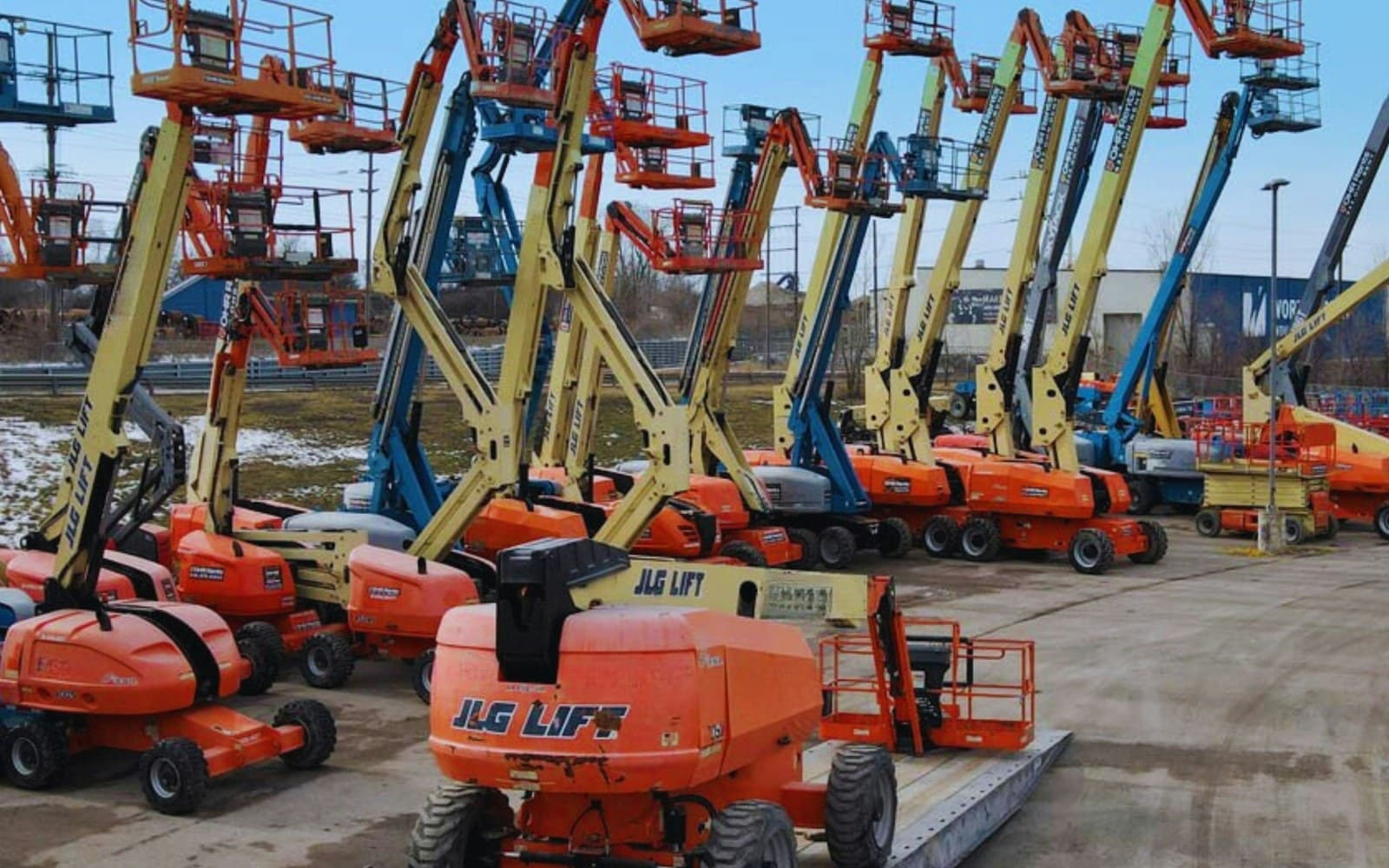
The same wind and stability principles apply to access equipment: scissor lifts, boom lifts, and spider lifts have their own wind and gradient limits, covered in more detail on our Access & Height Equipment page.
Operator Certification and Equipment Inspection Records
Documentation checks take a few minutes and remove a significant category of risk.
- Verify the operator holds a valid, UAE-recognised licence or certificate for the specific class and capacity of machine being used, a licence for a smaller crane class doesn't cover a larger one.
- Confirm HSE induction and site-specific training has been completed and logged for anyone entering the exclusion zone.
- Request the machine's current third-party inspection certificate and load-test documentation, and check the dates are within validity, not just present in a folder.
- Review recent daily pre-use inspection checklists for the specific unit, not a generic fleet record, and confirm any defects noted have been closed out before the machine is used.
- Keep a rapid-replacement contact on hand for breakdown scenarios, so a failed inspection or mechanical fault doesn't stall the programme while a like-for-like replacement is sourced.
If any of this documentation is missing, incomplete, or expired, the lift should not proceed until it's resolved, no exceptions for schedule pressure.
Running the Pre-Lift Briefing
The final step ties every previous check together into a short, structured conversation with the whole lift crew, ideally no more than ten to fifteen minutes.
- Confirm roles: operator, banksman, riggers, and anyone with stop-work authority.
- Walk through the lift sequence step by step, including the landing point and any blind spots.
- Reconfirm the exclusion zone boundaries and communication method.
- State the load weight, rigging configuration, and confirmed load chart capacity out loud.
- Confirm current wind conditions and the stop-work trigger.
- Ask the crew directly whether anyone has a concern: a genuine pause, not a rhetorical question.
This briefing should happen immediately before the lift, not the night before, since ground conditions, weather, and site activity can all shift between planning and execution.
Keeping This Checklist as a Working Reference
None of the above replaces a certified lift plan, a competent person's sign-off, or applicable UAE HSE regulations: it's a practical starting point to help supervisors ask the right questions and catch the gaps that most often get missed under time pressure. For lift-specific guidance, always defer to your project's HSE documentation and a qualified lift supervisor or engineer.
If you're planning a lift and want to talk through crane sizing, rigging, or ground conditions with a team that inspects and load-tests its own fleet, check our FAQs for common questions, get a quote for the equipment you need, or contact us and speak with our team directly on +971 56 901 0656 before the lift date is locked in.
Get a Free Quote
Your details open in WhatsApp, ready to send.