Forklift vs Telehandler: Which One Does Your Site Actually Need?
Choosing between a forklift and a telehandler looks like a simple fleet decision until the wrong machine turns up on site and the job slows down. Both move and place material, both come in a wide range of capacities, and both get marketed as "do anything" machines. In practice they are built for different ground, different reach, and different jobs, and picking the wrong one costs you cycle time, fuel, and sometimes safety margin. Here is how to think it through properly.
Reach and Lift Height: The Core Difference
The single biggest distinction between the two machines is how they get a load off the ground and where they can put it.
A forklift lifts vertically on a fixed mast directly in front of the chassis. It is fast, stable and precise for straight up-and-down work: think racking, container loading, and pallet stacking on a flat floor. What it cannot do is reach forward or place a load beyond its own footprint.
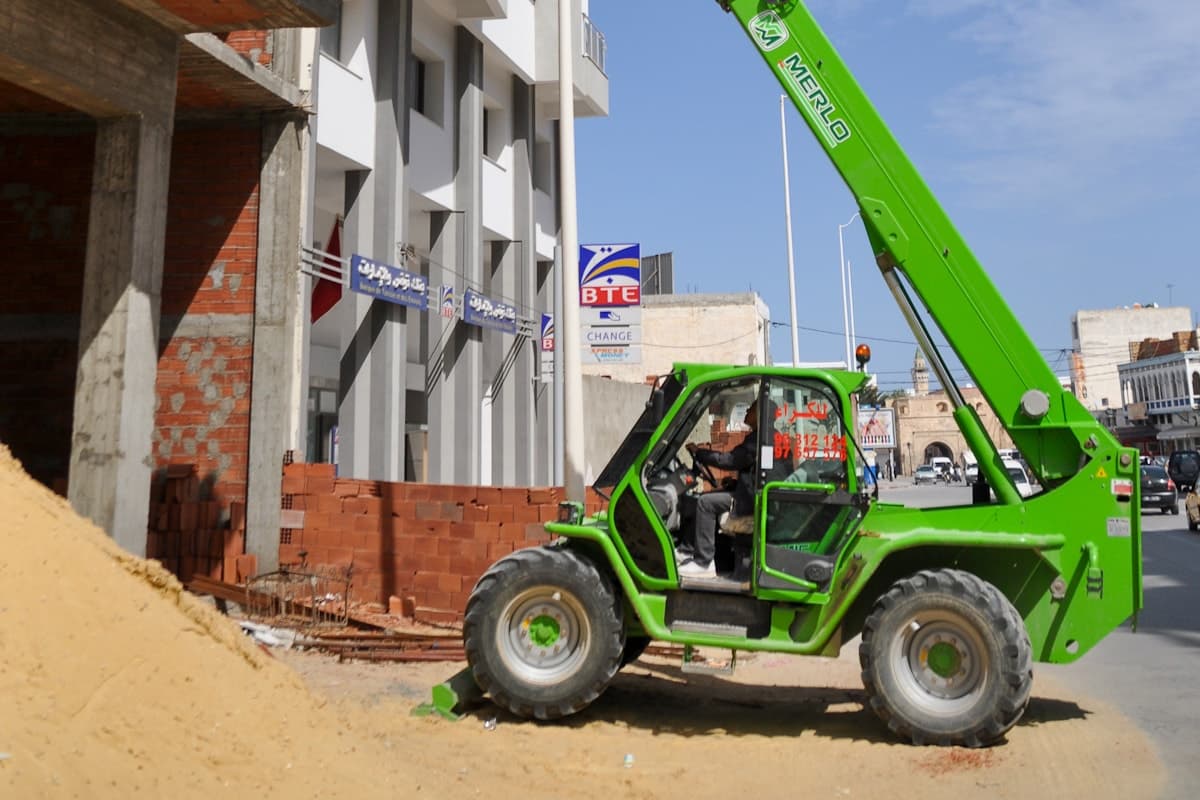
A telehandler uses a telescopic boom that extends forward and upward, letting it lift a load, drive it out and over an obstacle, and set it down at height or at distance from the machine. That forward reach is what makes a telehandler useful on a site where the target location isn't directly in front of the machine: over a foundation, onto a first-floor slab, or across a trench.
Vertical Reach vs Forward Reach
If your job is "lift it three metres and set it on a shelf," a forklift does that with less machine, less cost and a tighter turning circle. If your job is "lift it, carry it forward, and set it eight metres out and four metres up," only a telehandler's boom geometry gets you there. Confusing the two almost always means either an underpowered machine straining outside its safe working range, or an oversized one doing simple pallet work it was never optimised for.
Ground Conditions: Where Each Machine Belongs
Ground surface is the second filter, and it eliminates one option before capacity even enters the conversation.
Forklifts are designed for hard, level, prepared surfaces: warehouse floors, yards, container terminals, finished hardstanding. Their tyres and suspension are not built to absorb the shock loading of rutted, sloped or unfinished ground, and doing so repeatedly damages the machine and puts the operator and load at risk.
Telehandlers are built for exactly that rougher terrain. Larger, more aggressive tyres, greater ground clearance and a more robust chassis let them operate on compacted earth, gravel, and the uneven surfaces typical of an active construction site before roads and hardstanding are finished. If your site doesn't have a paved floor yet, a telehandler is very often the only realistic option regardless of reach requirements.
Load Capacity Trade-Offs
Rated capacity on a spec sheet only tells part of the story, and this is where many hire decisions go wrong.
A forklift's capacity is fairly constant across its lift height, because the load stays close to the chassis on a vertical mast. What you see on the nameplate is close to what you get through most of the lift range.
A telehandler's capacity drops sharply as the boom extends. A machine rated to lift several tonnes at minimum reach might only manage a fraction of that at full extension and maximum height: the load chart, not the headline number, is what governs a safe lift. This is a critical planning point: match the telehandler's rated capacity at your actual required reach and height, not its maximum quoted figure, and always work from the manufacturer's load chart for the specific attachment and configuration in use.
Attachments and Versatility
Forklifts are largely single-purpose: forks, and occasionally a clamp or rotator attachment for specialised palletised or drum handling. That focus is a strength: less to configure, less to train on, faster to deploy.
Telehandlers are built around interchangeability. Beyond standard forks, common attachments include buckets for muck-away and material shifting, man-baskets for working at height (subject to the correct certification and safe working load), winches, and lifting jibs for crane-style pick-and-place work. That versatility is why a single telehandler can often replace several single-purpose machines across the life of a project, cutting down on the number of units mobilised to site.
Typical Use Cases
Warehousing, Container Handling and Yard Work
Distribution centres, container yards, and any operation moving palletised goods across a flat, paved surface are forklift territory. High cycle rates, tight aisle widths, and repetitive vertical lifting all favour the forklift's compact footprint and mast-based precision. Operations based around ports, free zones and logistics parks, the kind of work typical of equipment rental in KEZAD, are a natural fit for forklift fleets sized to throughput rather than reach.
Construction Sites and Material Placement at Height
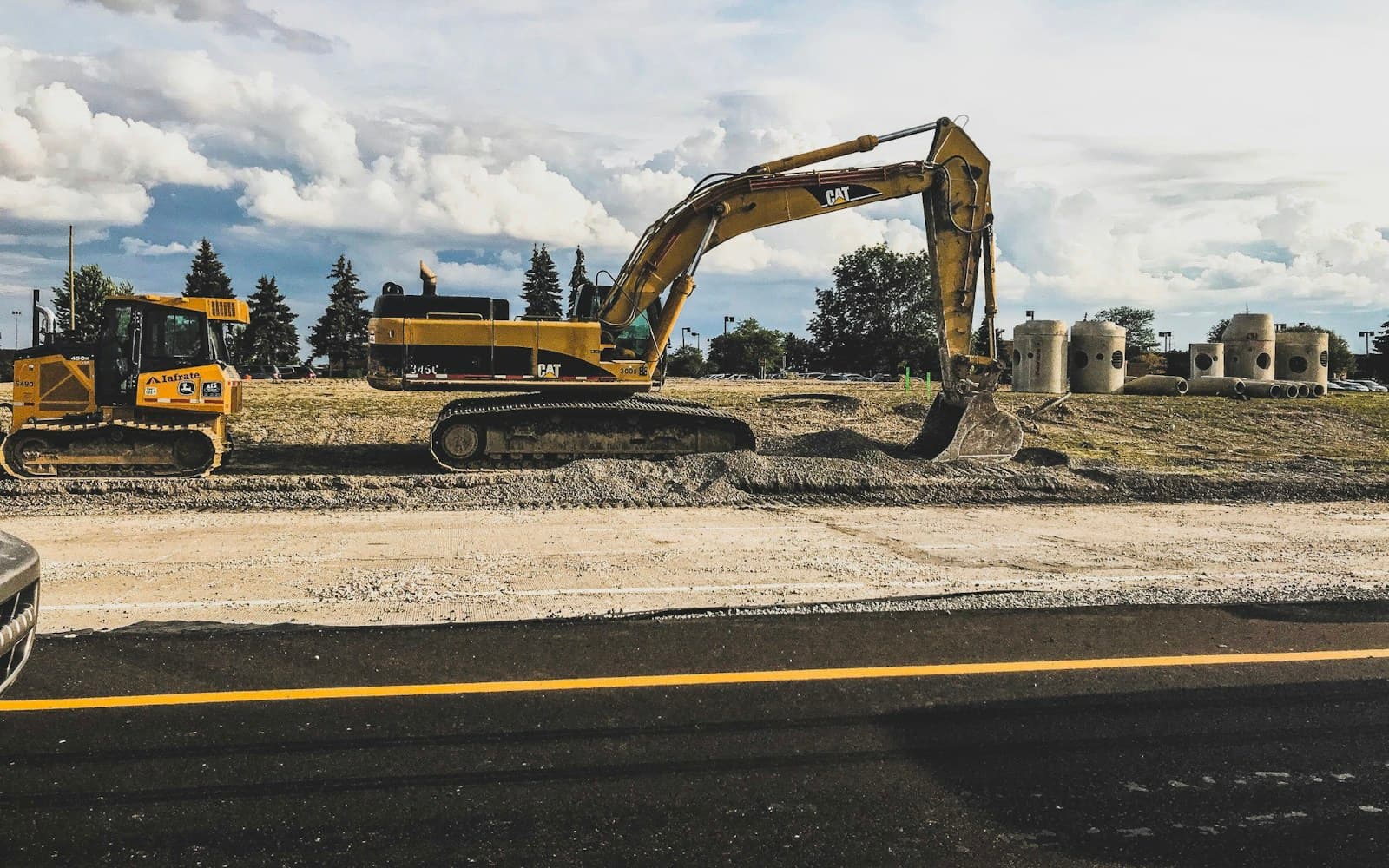
Building sites, civil works and any job involving material placement over rough or partially finished ground call for a telehandler. Lifting block, timber, or plant materials up to a working platform, feeding materials over an excavation, or reaching into a first-floor opening are all jobs a forklift physically cannot do. Our Earthmoving & Site Work fleet is built around exactly this kind of ground-condition-first thinking, pairing telehandlers with excavators and backhoe loaders for sites that aren't yet paved.
A Practical Decision Framework
Work through these questions in order and the right machine usually becomes obvious:
- Is the working surface finished and level, or rough and unfinished? Unfinished ground rules out a forklift immediately.
- Does the load need to travel forward or upward beyond the machine's own footprint? If yes, you need boom reach, not mast height.
- What is the actual load weight at the actual reach and height required, not the maximum spec on either machine? Check the load chart, not the headline capacity.
- Will the machine need more than one attachment over the course of the job? If versatility matters more than raw cycle speed, lean telehandler.
- How many cycles per hour does the job demand? High-frequency, short-distance pallet work still favours a forklift's speed and manoeuvrability even where a telehandler could technically do it.
Most sites, in fact, end up running both (a forklift for yard and warehouse throughput, a telehandler for site placement and rough ground) rather than trying to force one machine to cover both roles. Our forklift rental fleet runs from 3 to 25 tonnes, with telehandlers, mobile crane rental and access platforms alongside, so mixed-fleet hire is straightforward from a single supplier.
If you're weighing this up for an active project, it's worth talking it through rather than guessing from a spec sheet. Maxtgc supplies both forklifts and telehandlers across Abu Dhabi with certified operators, delivery to site, and flexible short or long-term terms, including fast mobilisation for operations based around equipment rental in Mussafah. Call or WhatsApp +971 56 901 0656 to discuss your ground conditions, reach and load requirements, or get a quote directly and we'll help you match the right machine to the job before it's mobilised.
Get a Free Quote
Your details open in WhatsApp, ready to send.